Sponsored article
In the dynamic landscape of healthcare, effective collaboration among professionals is crucial. Innovative training methods, such as immersive experiences, are playing a pivotal role in fostering seamless teamwork and enhancing communication skills. By simulating real-world scenarios, these training experiences allow health professionals to hone their skills in a controlled environment, leading to improved patient outcomes and a more efficient healthcare system.
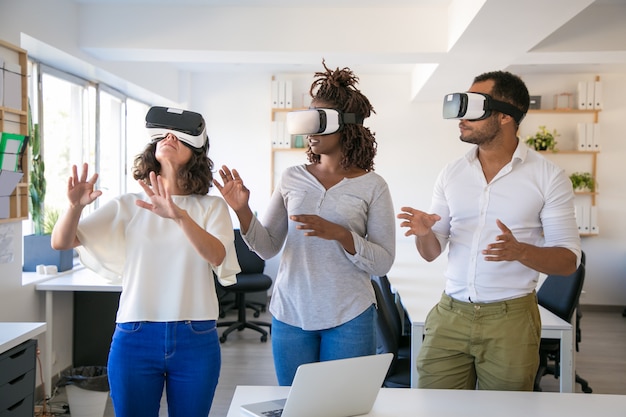
Virtual reality (VR) is transforming healthcare training by offering immersive technology that enhances the learning experience for health professionals. Through the use of VR simulations, trainees can engage in realistic clinical scenarios without the risks associated with practicing on real patients. This technology provides a safe and controlled environment where skills can be honed and refined. Trainees can repeatedly practice procedures, enhance their critical thinking, and develop their decision-making skills, all of which are vital in high-pressure healthcare situations.
Furthermore, VR encourages collaboration by allowing multidisciplinary teams to work together in these simulated environments, thereby improving teamwork and communication among healthcare professionals. By integrating immersive technology into healthcare training programs, interprofessional education becomes more effective. The use of virtual reality ensures that practitioners are better prepared for real-world challenges, enhancing the overall quality of healthcare delivery. Want to know more? You can find it at https://spirit-sbe.eu.
Experiential learning offers significant advantages for health professionals, primarily by enhancing practical skills and fostering effective teamwork. Engaging in hands-on experiences allows healthcare teams to apply theoretical knowledge in a controlled, real-world environment, bridging the gap between classroom learning and clinical practice. This approach not only improves technical competencies but also encourages health professionals to adapt to dynamic situations efficiently, crucial for high-stakes medical scenarios. By simulating real-life cases, experiential learning empowers teams to practice and refine their collaborative efforts, essential for delivering holistic patient care.
Moreover, experiential learning plays a pivotal role in developing essential communication skills among health professionals. The immersive nature of this learning model requires team members to interact, share insights, and make collective decisions, thereby strengthening their ability to communicate effectively across disciplines. Improved communication skills directly enhance teamwork, ensuring that patient care is both comprehensive and coordinated, ultimately leading to better patient outcomes. Thus, experiential learning is instrumental in shaping proficient, cohesive healthcare teams dedicated to excellence in patient care.
Case studies of immersive training experiences in healthcare offer compelling insights into how these innovative methods can enhance collaboration and lead to healthcare success. One notable example is the implementation of virtual reality (VR) tools at a leading hospital, where medical teams underwent simulated emergency response scenarios. Utilizing immersive training, the healthcare providers improved their ability to coordinate across departments, leading to a 25% reduction in response times. Another case involves an interdisciplinary simulation lab at a medical university that brought together nursing, medical, and pharmacy students. Through mixed-reality simulations, students collaborated more effectively, gaining critical communication skills essential for real-world healthcare settings.
The positive impacts observed in these case studies highlight several key benefits of immersive training for improving interprofessional relationships and team performance. These include:
These examples demonstrate the immense potential of immersive training in fostering collaboration, leading to increased healthcare success.